Nigeria is approaching another presidential election with a familiar problem. There are many people who want the presidency, but only a handful of names dominate the national conversation.
That is where the uneasiness begins.
On paper, Nigerians have choices. Several politicians have emerged from different platforms with presidential ambitions. But in the public imagination, the race is already narrowing around politicians Nigerians have seen before.
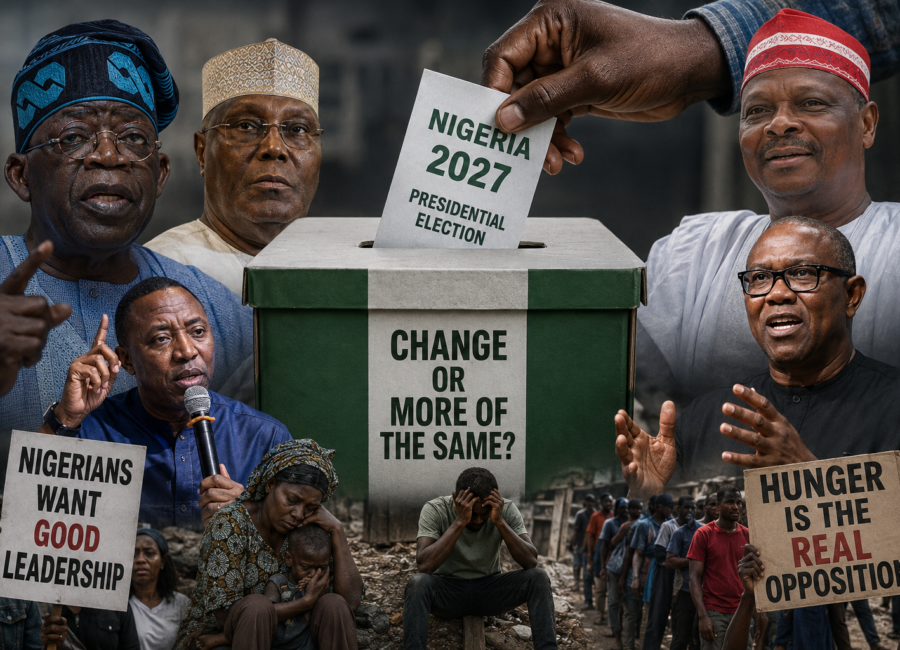
President Bola Ahmed Tinubu is seeking another term on the platform of the All Progressives Congress (APC). Former Vice President Atiku Abubakar is flying the flag of the African Democratic Congress (ADC). Peter Obi is now the presidential candidate of the Nigeria Democratic Congress (NDC), with former Kano State governor Rabiu Musa Kwankwaso as his running mate.
And then there are other names. Seyi Makinde, Omoyele Sowore, Donald Duke and several others have presidential ambitions. Yet, how much of the national conversation is really about them?
That is the question.
The problem is not the absence of candidates
Perhaps Nigerians are not suffering from a shortage of politicians who want to become president. What appears to be missing is a credible political alternative capable of breaking through the noise created by the established actors.
This is not entirely the fault of the lesser-known candidates.
Nigeria’s political system has a way of making the presidency look like an exclusive club. A politician may have ideas, experience and a record to present, but without a formidable political structure, substantial resources, name recognition and alliances across the country, it is difficult to move from being a presidential aspirant to being a serious presidential contender.
So the same names return.
They change parties. They form new alliances. They quarrel with former allies. They reconcile. They move from one political platform to another. And eventually, Nigerians are asked to make another choice among politicians many of them have watched for years.
Is this really political renewal?
Or are we simply changing the arrangement around the same people?
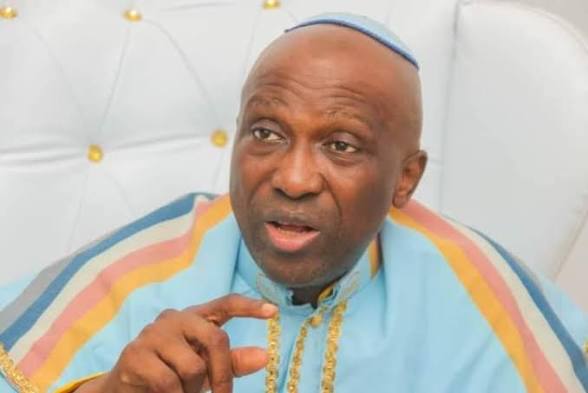
We have seen these politicians before
This is perhaps the most uncomfortable part of the conversation.
Nigerians are not meeting these major actors for the first time.
Tinubu has spent decades in politics, from his years as a senator to his time as Lagos governor and eventually President. Atiku has been a major figure in Nigerian politics since the military era, served as vice president and has contested the presidency several times. Obi was governor of Anambra State before becoming one of the most influential figures in the 2023 presidential election. Kwankwaso has been governor of Kano, a federal minister, senator and presidential candidate.
Their records are therefore available for examination.
The question should not simply be who speaks better at rallies or who has the most passionate supporters online.
The question should be much harder.
What did you do when you had power?
What did you fail to do?
What did you promise?
What did you actually deliver?
And perhaps most importantly, what would you do differently if Nigerians gave you the presidency?
These are questions that should sit at the centre of the 2027 conversation.
Unfortunately, they can easily be buried beneath religion, ethnicity, party loyalty, political friendships, old grievances and the endless battle over who belongs to which region.
When politics becomes about where the candidate comes from
Nigeria has spent decades struggling with this.
A candidate can make a poor argument and still receive support because he is “our own”. Another can make a compelling argument and be rejected because he is from the wrong part of the country.
Religion makes the calculation even more complicated.
For some voters, the most important question is not whether a candidate understands the economy, security or education. It is whether the candidate shares their faith.
For others, tribe comes first.
For others, party comes first.
Then there are those whose loyalty is built around political personalities.
This is not unique to one region or one group. But it becomes particularly dangerous when identity completely replaces accountability.
A voter can defend a politician’s failure simply because the politician belongs to his region. Another can condemn a good policy simply because it came from a rival party.
At that point, democracy becomes less about choosing the best available leadership and more about defending one’s side.
And Nigeria pays the price.

The manifesto seems to be losing its place
What happened to the manifesto?
What happened to the detailed discussion of how Nigeria will create jobs, reduce insecurity, improve electricity, reform education, strengthen healthcare, increase food production and make the naira more stable?
These questions should determine elections.
Instead, political conversations often begin and end with who is supporting whom.
A politician leaves one party and joins another. Supporters immediately begin explaining why the politician is now right.
A former opponent becomes an ally. Yesterday’s criticism suddenly disappears.
A politician who spent years condemning a particular political platform can join it and suddenly discover that the same platform is now capable of saving Nigeria.
Nigerians have seen this movie repeatedly.
So it is reasonable to ask: what exactly is being changed?
If the people remain largely the same, the political culture remains the same, the methods remain the same and the incentives remain the same, why should Nigerians expect a radically different result?
The Tinubu question
President Tinubu has a different argument.
He can point to reforms that his administration says were necessary to repair Nigeria’s finances and attract investment. His government has defended the removal of fuel subsidies, exchange-rate reforms and other measures as painful but necessary steps toward a stronger economy.
But Nigerians are also entitled to ask whether the pain has become too heavy.
That is the political problem Tinubu must confront.
A reform can be economically defensible and still be politically painful.
A government can have good intentions and still fail to convince the person who cannot afford dinner.
That person is not interested in the language of macroeconomic adjustment when there is no money in his pocket.
So the question for Tinubu in 2027 should not merely be whether his reforms were necessary.
It should be whether Nigerians can now see a credible path from sacrifice to prosperity.
The Atiku question
Atiku comes with perhaps one of the longest political resumes among the major contenders.
But that experience can be both his greatest strength and his greatest weakness.
Experience gives him knowledge of government, politics and the workings of the Nigerian state. Yet it also means Nigerians have had many years to form opinions about him.
Can a politician who has been part of the national political establishment for so long convince voters that he represents a fundamental break from the system?
That is not an easy question.
Atiku’s move to the ADC and the attempt to construct a broad opposition coalition show an understanding that defeating an incumbent requires more than personal popularity. The opposition needs structure, geographical reach and alliances across the country.
But coalition politics has its own problem.
Can politicians with presidential ambitions genuinely subordinate personal ambition to a larger national project?
Nigeria has seen opposition alliances before. It has also seen them collapse under the weight of competing interests.

The Obi-Kwankwaso question
Peter Obi presents perhaps the most interesting political story of the group because his 2023 campaign demonstrated that a candidate outside the traditional two-party establishment could fundamentally disrupt the old electoral calculations.
But 2027 is not 2023.
Obi is no longer running under the Labour Party. He is now the NDC presidential candidate, with Kwankwaso as his running mate. The NDC has formally affirmed the ticket.
That combination changes the political calculation.
Obi brings the support and political identity that developed around his 2023 campaign. Kwankwaso brings a substantial political network, particularly in Kano and parts of northern Nigeria.
But can two political constituencies with different histories, expectations and regional strengths genuinely operate as one national movement?
That is where the real test lies.
It is one thing to put two popular politicians on the same ticket.
It is another thing to turn their supporters into one coherent national electorate.
And what about everyone else?
This is where Nigerian politics needs to become more honest.
There are other people seeking the presidency.
But why are they not receiving the same attention?
Is it because they lack political structures?
Is it because the media concentrates too heavily on familiar names?
Is it because Nigerian voters have already decided that only a few people are capable of winning?
Or is the political system itself making it almost impossible for a genuinely new figure to break through?
If the answer is the last one, then the problem goes beyond the 2027 election.
It becomes a democratic problem.
A democracy should not merely give citizens the right to vote. It should give them meaningful alternatives.
But perhaps the biggest problem is hunger
This may be the issue politicians underestimate most.
There is a Nigerian who is not thinking about Atiku.
There is another who is not thinking about Obi.
There is another who does not care whether Tinubu wins or loses.
There is a mother thinking about school fees.
A father thinking about rent.
A young graduate thinking about employment.
A trader thinking about electricity and transport costs.
A farmer thinking about security.
A worker whose salary disappears before the middle of the month.
For such people, politics can begin to feel like a luxury.
And when citizens become convinced that elections will not improve their circumstances, political participation itself can lose its appeal.
Yet Nigerians have not necessarily abandoned democracy.
Many still want democratic government. What they increasingly question is whether the political system is capable of producing the kind of leadership they need.
That tells us something important.
Nigerians may be tired of the way politics is practised without necessarily being tired of democracy itself.
So, who is the “new” leader?
This is perhaps the hardest question of all.
Who among the major actors can genuinely produce something different?
Tinubu can argue that his reforms are laying the foundation for a different economy.
Atiku can argue that experience gives him the capacity to govern.
Obi can argue that his political movement represents a break from the traditional establishment.
Kwankwaso can point to his record and political network.
But Nigerians should not be asked to believe anybody simply because of a speech.
The burden should be on every candidate.
Show us the numbers.
Show us the record.
Show us the people who will work with you.
Show us how you will secure the country.
Show us how you will feed the people.
Show us how you will create productive jobs rather than temporary political appointments.
Show us how you will make institutions stronger than individuals.
Show us what you will do when your own party members are wrong.
Show us that you can take criticism without treating every critic as an enemy.
And above all, show Nigerians why your presidency would not simply become another chapter in the country’s long story of political recycling.

Nigeria does not need another Messiah
Perhaps Nigerians should stop looking for a political “born again” leader who will arrive and magically fix everything.
Nigeria is too complicated for that.
The country needs institutions that work. It needs leaders who understand that public money is not private property. It needs political parties that are more than vehicles for winning elections. It needs citizens who demand accountability from their own side, not only from their opponents.
It also needs voters to move beyond the dangerous belief that supporting a politician means defending everything that politician does.
That is not loyalty to Nigeria.
That is loyalty to a person.
And Nigeria has paid dearly for it.
The real question for 2027, therefore, may not be “Who will win?”
It may be “What exactly are Nigerians voting for?”
Are they voting for a region?
A religion?
A party?
A personality?
A grievance?
A promise?
Or a demonstrable record of competence?
Because if Nigerians keep changing the name on the ballot without changing the standard by which they choose leaders, the country may continue to produce different election results without producing a fundamentally different Nigeria.
And that is the uncomfortable question the 2027 election is already putting before us:
Can anything genuinely new come from a political system that keeps recycling its major actors, alliances and methods?
Or is the real new Nigeria going to begin only when voters themselves decide that identity, party loyalty and political sentiment can no longer be more important than performance?
That answer, ultimately, belongs to the Nigerian voter.