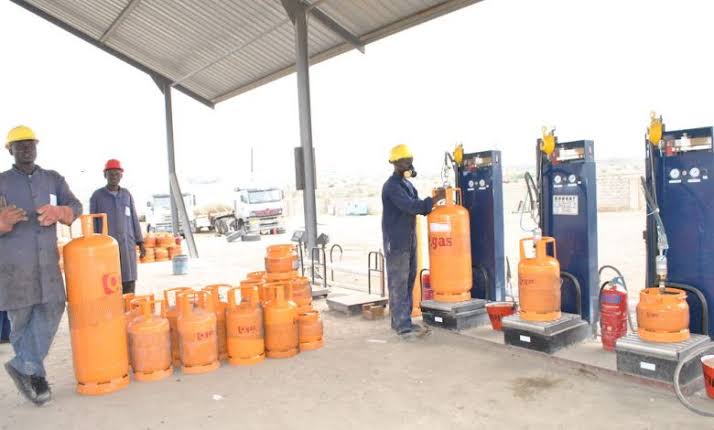
The price of cooking gas has increased in several parts of Nigeria, with consumers in Lagos, Ogun, Ibadan and Abuja facing higher costs amid rising depot prices and increased global demand.
Retail prices of liquefied petroleum gas (LPG), commonly known as cooking gas, have climbed to ₦1,650 per kilogramme in parts of Lagos and Ogun states, while some outlets in Abuja now sell the product for ₦1,800 per kg.
In Ibadan, Oyo State, the price varies depending on the location and whether consumers purchase from wholesalers or retail outlets. Available market information indicates that the product sells for between ₦1,400 and ₦1,700 per kg.
In Lagos, Techno Oil outlets in Festac increased their price from ₦1,450 to ₦1,650 per kg.
NIPCO stations at First Gate and the Trade Fair Complex also adjusted their rates from ₦1,280 to ₦1,480 per kg.

In Ogun State, Ecogas refilling plant in Sagamu raised its price from ₦1,500 to ₦1,600 per kg, while Oyejo gas station in Shiwun increased its rate from ₦1,450 to ₦1,650.
Consumers in Abuja have also experienced higher prices, with some outlets raising their rates from ₦1,700 to ₦1,800 per kg. NIPCO stations in the Federal Capital Territory sold the product at ₦1,650 per kg.
The increases followed a 31.8 per cent rise in depot prices, which moved from ₦1,100 to ₦1,450 per kg within one month.
A gas expert, Lawal Taofeek, attributed the development to increased global demand during the winter season in Europe.
Speaking in an interview with TheCable, Taofeek explained that European countries consume more gas during the period to heat homes and other facilities, pushing up demand in the international market.

“This is the peak heating season in Europe, when demand for gas rises significantly as countries increase consumption for heating.
“This seasonal surge in demand puts upward pressure on global gas prices, which in turn affects LPG prices. The trend is expected to continue until late December or early January, as it is a seasonal period of rising gas prices,” he said.
Taofeek said prices were expected to decline after the winter season and the associated increase in global demand.
The latest increase is adding to the cost of household energy for Nigerians who depend on cooking gas, with prices varying across states, locations and retail outlets.
Submit a Press Release | Advertise With Fresh News | Contact Us