
There is a point at which reconciliation stops being about returning to the way things used to be.
For Peter and Paul Okoye, that point may have arrived.
The two brothers gave Africa one of its most successful music partnerships as P-Square. They shared the stage, built a powerful brand together and turned their brotherhood into music that crossed borders.
But after years of disagreements, a breakup, a highly celebrated reunion and another bitter separation, perhaps the question Nigerians should be asking is no longer whether P-Square can come back.
Perhaps it is whether P-Square should come back at all.
It is an uncomfortable question because many fans still want to see the twins together.
Understandably so.
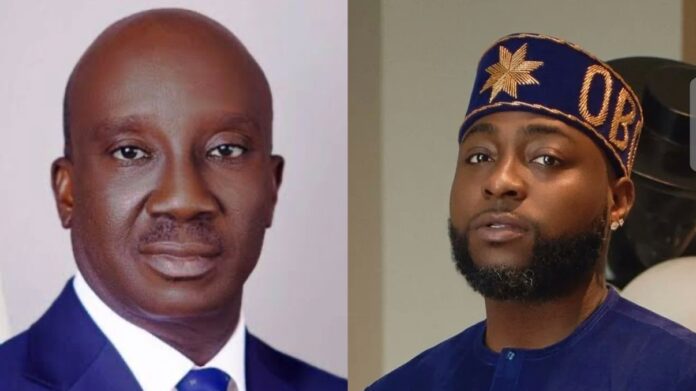
P-Square was special. Peter and Paul were not just two artists placed together by a record label. They were brothers who grew up together and developed their careers side by side. Their chemistry was a major part of what made the group successful.
But that same closeness also made their disagreements unusually complicated.
When two unrelated business partners fall out, they can walk away from one another. When two brothers fall out, the problem follows them home.
That has been one of the biggest difficulties in the P-Square story.
Their disagreements have touched music, management, money, family and personal relationships. At different points, their elder brother Jude Okoye has also become part of the public dispute.
The matter has gone beyond what fans can dismiss as ordinary sibling quarrels.
There have been public accusations, financial questions, investigations and legal proceedings.
And that should make everyone pause before demanding another reunion simply because Nigerians miss P-Square.
A reunion is not the same thing as a solution.
Peter and Paul have already shown that they can come back together after a bitter separation. Their 2021 reunion was celebrated by fans who believed the worst was finally behind them.
Yet the peace did not last.
By 2024, the disagreement had returned to the public space.
That should tell us something.
The problem may not be that the brothers cannot forgive one another. The deeper problem may be that they have not found a structure that allows them to work together without repeatedly reopening old wounds.
This is where the romantic idea of “family should stay together” can become unhelpful.
Yes, Peter and Paul are brothers.
Yes, they should be able to maintain a relationship as brothers.
But being brothers does not mean they must remain business partners.
In fact, separating the two may be the healthiest option available to them.
Peter can be Peter.
Paul can be Paul.
They can support one another as family without having to share every business decision, every song, every account, every professional responsibility or every stage of their careers.
There is nothing shameful about that.
Some partnerships work because the people involved are compatible at a particular stage of their lives. When circumstances change, the partnership may no longer work in the same way.
P-Square’s greatest mistake may have been assuming that because the brothers could reconcile personally, they could automatically rebuild the same professional relationship.
That is not necessarily true.
Trust in business is different from love within a family.
A brother may forgive you and still decide that he cannot work with you.
A sister may love you deeply and still refuse to enter a business partnership with you again.
Those decisions do not automatically mean the relationship has failed.
Sometimes they protect it.
And this may be what Peter and Paul need most.
The public should also stop treating every disagreement between them as entertainment.
For years, social media has turned the P-Square dispute into something almost resembling a sporting contest.
One side supports Peter.
Another supports Paul.
Old interviews are brought back. New allegations generate fresh arguments. Fans analyse every post and statement, looking for clues about who is right and who is wrong.
But there is a cost to that.
The more the public takes sides, the harder it becomes for the brothers to resolve anything privately.
Every disagreement becomes a battle of reputation.
Every apology can be interpreted as defeat.
Every silence can be interpreted as guilt.
And every new statement creates another reason for the other brother to respond.
That is not a healthy environment for reconciliation.
There is also another reality that should not be ignored: P-Square has already achieved what very few African music groups ever will.
The brothers do not need to prove that they were successful together.
They did.
They do not need another album to establish their place in Nigerian music history.
Their catalogue, performances and influence have already done that.
So there is little reason to risk their personal relationship simply to satisfy the demand for another P-Square comeback.
If they eventually reach a point where they can genuinely work together again, that should happen naturally.
But it should not be forced by fans, promoters, family members or the nostalgia of people who simply want to see the old P-Square back.
There is a difference between missing an era and needing that era to return.
Nigerians miss P-Square because the group was part of their lives.
But Peter and Paul are no longer exactly the people they were when P-Square became a household name.
They are older. They have families. They have built individual identities and careers. They have experienced success separately. Most importantly, they have gone through disputes that have changed the relationship.
Trying to recreate the past may therefore be less realistic than accepting what the present has become.
Perhaps the best ending for P-Square is not another dramatic reunion.
Perhaps it is peace.

Peter should be able to pursue his career without feeling that he must constantly defend his contribution to P-Square.
Paul should be able to pursue his own music without feeling that he must repeatedly explain his role in the group.
And both should be able to attend family gatherings without the entire country waiting for the next chapter of their disagreement.
If, one day, they decide to perform together again, Nigerians will celebrate it.
But it should be a bonus, not a requirement.
The brothers should first rebuild whatever relationship they want to have away from the stage and away from cameras.
If that eventually produces another P-Square performance, so be it.
If it does not, that should also be accepted.
Because sometimes the most mature way to save a relationship is not to rebuild the partnership that damaged it.
For Peter and Paul Okoye, staying brothers may matter far more than remaining P-Square.
Submit a Press Release | Advertise With Fresh News | Contact Us