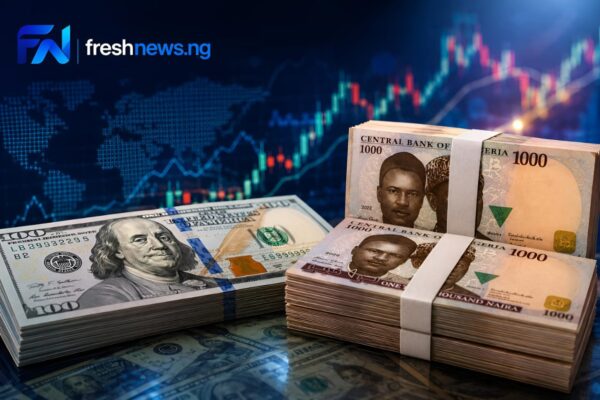
The Nigerian naira continued to gain ground against the US dollar on Friday, August 28, 2026, with fresh foreign exchange figures showing further improvement in the official market.
The dollar was quoted at about ₦1,341.66 in the Nigerian Foreign Exchange Market (NFEM), according to the latest available market data.
The latest figure follows Thursday’s rate of about ₦1,338.59 per dollar and Wednesday’s rate of ₦1,343.59.
Official market update
The NFEM rate placed one US dollar at approximately ₦1,341.66 as of Friday morning.
The movement comes amid improved dollar liquidity and stronger external reserves, which have helped ease pressure on the naira in the official foreign exchange market.
For Nigerians who need dollars for international transactions, the official NFEM rate provides an important reference point, although the rate offered by banks and other authorised dealers may differ.

Parallel market
The dollar remained more expensive in the parallel market.
Available market reports showed the US currency trading at around ₦1,400 for buying and ₦1,410 for selling on Thursday, August 27.
At the reported selling rate of ₦1,410, the dollar was about ₦68 higher than the latest indicative NFEM rate of ₦1,341.66.
This difference means Nigerians buying dollars outside the official market could pay considerably more.
How much is $100, $500 and $1,000?
Using the reported parallel-market selling rate of ₦1,410 per dollar:
$100 = ₦141,000
$500 = ₦705,000
$1,000 = ₦1,410,000
These are simple calculations based on the reported rate. The actual amount may vary depending on the dealer, location and size of the transaction.
At the official indicative rate of ₦1,341.66, the same amounts would be approximately:
$100 = ₦134,166
$500 = ₦670,830
$1,000 = ₦1,341,660

Why is the naira gaining?
The naira’s recent improvement has come as Nigeria records better dollar liquidity and stronger foreign exchange reserves.
Nigeria’s external reserves were reported to have risen to about $53.34 billion, described as an 18-year high.
The stronger reserve position and improved availability of foreign currency have helped reduce pressure on the naira in the official market.
Despite this, demand for dollars remains significant among importers, businesses, travellers, students and other Nigerians with foreign currency obligations.
Why exchange rates differ
The rate published by the NFEM is not necessarily the exact amount a customer will receive when buying or selling dollars.
Banks, Bureau De Change operators and other authorised dealers may quote different rates depending on dollar availability, transaction size, location and market conditions.
Parallel-market rates can also change during the day as demand and supply shift.
Nigerians looking to buy dollars for travel, school fees, imports, subscriptions, remittances or other international payments should therefore confirm the current rate before completing a transaction.

Dollar To Naira Rate Today — August 28, 2026
As of Friday, August 28, the latest available indicative NFEM rate put the dollar at about ₦1,341.66.
In the parallel market, available reports placed the dollar at approximately ₦1,400 for buying and ₦1,410 for selling.
The figures are only a guide because actual exchange rates can vary between banks, Bureau De Change operators and other dealers.
The Central Bank of Nigeria does not recognise the parallel market as an official foreign exchange market.
Note: Exchange rates can change during the trading day. Actual rates may vary based on dollar availability, location, transaction size and prevailing market conditions.
Submit a Press Release | Advertise With Fresh News | Contact Us