
Cash held outside Nigeria’s banking system declined to its lowest level in seven months in June 2026, according to new figures released by the Central Bank of Nigeria (CBN), indicating that more physical currency is gradually returning to deposit money banks as the regulator intensifies efforts to expand digital payment adoption.
Data contained in the CBN’s latest Money and Credit Statistics showed that currency outside banks fell to ₦4.92 trillion in June from ₦5.19 trillion recorded in May.
The latest figure also represents a decline of ₦485.80 billion, or 8.98 per cent, compared to the ₦5.41 trillion recorded in December 2025, highlighting a steady reduction in the volume of cash kept outside the formal banking system over the past six months.

June’s total marks the lowest level since November 2025, when currency outside banks stood at ₦4.91 trillion. The development comes as the apex bank continues to encourage electronic payments and broader financial inclusion as part of its strategy to reduce the country’s dependence on cash transactions.
The report further showed that the total volume of currency in circulation also declined during the review period. According to the CBN, currency in circulation dropped from ₦5.73 trillion in December 2025 to ₦5.52 trillion in June 2026, representing a decrease of ₦209.56 billion or 3.66 per cent.
While the amount of cash in circulation declined, the sharper fall in currency held outside banks suggests that more physical cash was deposited into the banking system rather than being permanently withdrawn from circulation.
The movement was, however, not entirely consistent throughout the period under review.
Currency outside banks declined from ₦5.41 trillion in December 2025 to ₦5.25 trillion in January before falling further to ₦5.19 trillion in February. Although data for March 2026 was not published by the CBN, the figure dropped to ₦5.08 trillion in April.
The trend briefly reversed in May when cash held outside banks rose from ₦5.08 trillion to ₦5.19 trillion, reflecting an increase of ₦109.34 billion, or 2.15 per cent.
That increase proved temporary as the figure declined by ₦270.97 billion in June to ₦4.92 trillion. The month-on-month drop of 5.22 per cent was the largest recorded within the six-month period covered by the available data.
Further analysis of the CBN figures showed that currency outside banks accounted for 89.11 per cent of total currency in circulation in June, compared with 91.27 per cent in May and 89.74 per cent in June 2025.
The figures indicate that nearly ₦89 out of every ₦100 in circulation remained outside the banking system in June, down from about ₦91 in the previous month.
Compared with May, the ratio declined by 2.16 percentage points, while it eased by 0.63 percentage points on a year-on-year basis, pointing to a gradual increase in the amount of cash retained within formal banking institutions.

The improvement becomes more evident when measured against the position at the end of 2025. In December, 94.33 per cent of all currency in circulation was outside banks, leaving only 5.67 per cent within the banking system.
By June 2026, the proportion of currency held outside banks had reduced to 89.11 per cent, while the share retained within banks increased to 10.89 per cent.
Although cash remains the dominant means of payment across retail markets, public transportation, rural communities and much of the informal economy, the figures suggest that a growing portion of physical currency is gradually finding its way back into the formal banking system as digital payment channels continue to expand.
The CBN had earlier unveiled its Nigeria Payments System Vision 2028, an initiative designed to deepen financial inclusion and encourage greater use of digital payment platforms across the country.

Under the plan, the apex bank aims to bring more cash into the formal financial system while onboarding an additional 50 million Nigerians into the financial ecosystem by 2028.
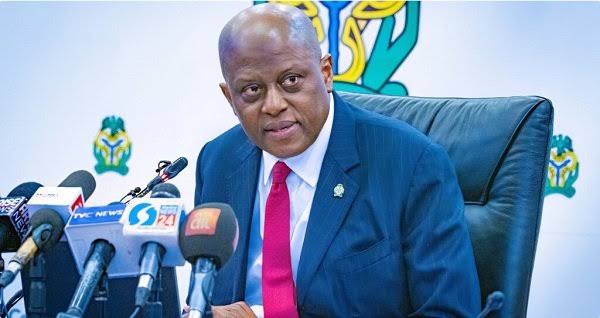
Speaking during the unveiling of the initiative in Abuja, CBN Governor Olayemi Cardoso said the bank intends to significantly reduce the amount of cash circulating outside the banking system.
According to Cardoso, “I would like to see a situation where we will reduce cash outside the banking system to less than 40 per cent of money in circulation.”
The CBN believes achieving that target would improve liquidity within the banking sector, strengthen monetary policy implementation, enhance financial intermediation and enable banks to provide greater support for economic growth.
Submit a Press Release | Advertise With Fresh News | Contact Us